
Lower Back Pain in Office Workers: Solutions
- Home
- Lower Back Pain in Office Workers: Solutions
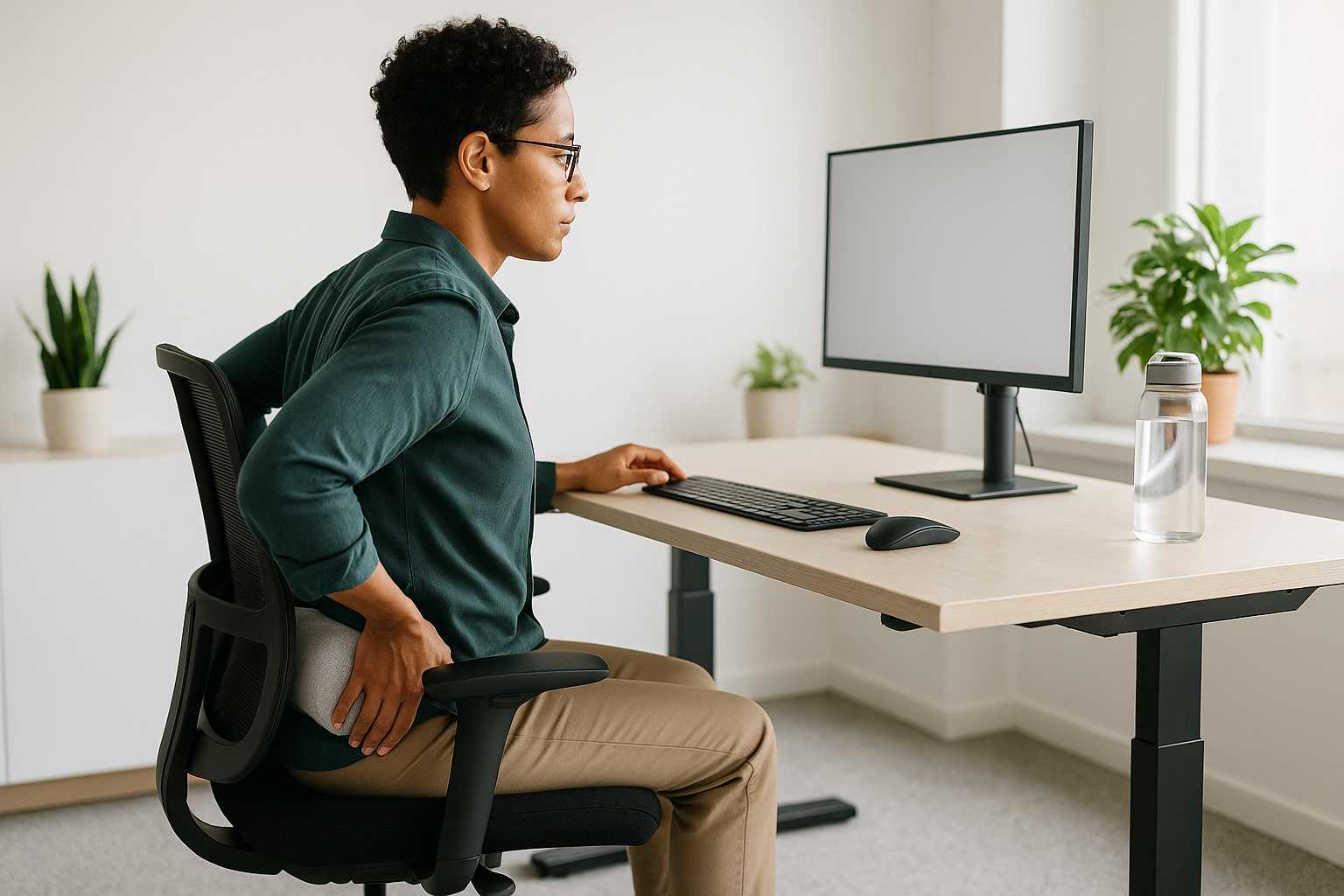
Lower Back Pain in Office Workers: Solutions
TL;DR: Most office-related low back pain comes from long sitting, poor desk setup, and weak or tight muscles. Small daily tweaks—better ergonomics, frequent movement, and targeted exercises—solve most cases. See red-flag signs below and reach out if symptoms persist.
Why office workers develop low back pain
- Prolonged sitting: Loads the discs and weakens stabilizing muscles over time.
- Poor ergonomics: Low laptop screens, unsupported chairs, wallet/phone in back pocket, feet not grounded.
- Tight hips/hamstrings: Pull the pelvis into poor alignment.
- Weak core & glutes: The back overworks to compensate.
- Stress & poor sleep: Heighten pain sensitivity and slow recovery.
Quick self-check (2 minutes)
- Seat height: Hips level with or slightly above knees (not lower).
- Feet: Flat on floor (or footrest).
- Back: Chair supports your natural low-back curve; avoid perching on the edge.
- Screen: Top of screen at or just below eye level; arm’s length away.
- Keyboard/Mouse: Elbows at ~90°, wrists neutral, shoulders relaxed (not shrugged).
Workstation setup checklist
- Adjustable chair with lumbar support (or a small pillow/rolled towel).
- Monitor raised on a stand or stacked books; use an external keyboard & mouse if on a laptop.
- Footrest if feet don’t reach the floor.
- Keep items you use often within forearm reach.
- Phone headset or speaker—no shoulder cradling.
- Consider a sit–stand desk (alternate positions rather than standing all day).
The 30–2 rule (beats “perfect posture”)
You don’t need a perfect posture—you need variety.
Every 30 minutes, move for 1–2 minutes. Ideas:
- Stand, march in place, or walk to get water.
- 10–15 bodyweight squats or heel raises.
- Gentle hip circles and shoulder rolls.
- Change your working posture (sit ↔ stand).
Set a silent timer or use calendar nudges.
5-minute “Desk Reset” (do 2–3×/day)
- Chin tucks (10 reps): Sit tall, glide chin straight back, hold 2 seconds.
- Seated thoracic extension (10 reps): Hands behind head, gently arch over chair back.
- Hip flexor stretch (30 sec/side): Half-kneel or lunge, tuck pelvis, lean forward slightly.
- Hamstring “kickouts” (10/side): Sit tall, extend one knee, flex foot, small pulse.
- Glute squeezes (20 reps): Seated or standing, slow 2-second holds.
- Figure-4 stretch (30 sec/side): Ankle over opposite knee, hinge forward gently.
If any movement worsens symptoms, skip it and let us know.
Lifestyle habits that help
- Walk 5–10k steps/day most days—breaks stiffness and boosts blood flow.
- Strength 2–3×/week: Focus on glutes, core, and back (bridges, bird-dogs, dead bugs, hip hinges).
- Hydration & nutrition: Dehydration and skipped meals can increase muscle tension and fatigue.
- Sleep 7–9 hours: Your back recovers at night.
- Stress tools: Box breathing (4-4-4-4) or short mindfulness breaks to dial down pain sensitivity.
What to try first (home plan: 2–4 weeks)
- Fix the desk (use the checklist).
- Add the 30–2 rule on workdays.
- Do the 5-minute reset twice daily.
- Walk daily + 2 short strength sessions weekly.
- Over-the-counter options (if safe for you): heat 10–15 min, or topical menthol/salicylate.
- Track your pain (0–10) and what helps; small wins count.
If pain is not clearly improving after 2–4 weeks, book an evaluation.
When to seek care sooner (red flags)
- New leg weakness, numbness in the groin/saddle area, or loss of bowel/bladder control
- Severe pain after a fall/accident
- Fever, unexplained weight loss, history of cancer, or IV drug use
- Pain that wakes you at night or is relentlessly worsening
If any of these apply, seek urgent medical attention.
How Unity Pain Management can help
- Expert evaluation & diagnosis (we focus on cause, not just symptoms).
- Personalized exercise & activity plan you can follow at work.
- Medications when appropriate (lowest effective dose, shortest duration).
- Trigger point injections for stubborn muscle knots.
- Joint/facet/SI evaluation and referrals for spine-guided procedures when indicated.
- Physical therapy referrals with clear goals your therapist can act on.
- Workplace notes & recommendations to support ergonomic changes.
FAQ
Is imaging (X-ray/MRI) always needed?
No. For typical office-related back pain without red flags, conservative care is the first step. Imaging is considered if symptoms persist or if red flags are present.
Is a standing desk the answer?
It helps only if you alternate positions. Prolonged standing can also aggravate symptoms—movement variety wins.
How long until I feel better?
Many people improve in 2–6 weeks with consistent ergonomics + movement. Stalled progress is a good reason to get evaluated.
Can I keep working out?
Usually, yes—modify intensity and avoid pain-provoking lifts (deep forward bends, heavy spinal loading) until symptoms settle.
Ready for relief?
If your back pain is limiting work or daily life, we can help you build a plan that fits your job and schedule.
Book online: unitypain.com
Medical disclaimer: This article provides general information and is not a substitute for personalized medical advice. If you have concerns or red-flag symptoms, seek medical care promptly.
- Share
