
Bone-on-Bone Knee: Causes & Treatment Options | UnityPain
- Home
- Bone-on-Bone Knee: Causes & Treatment Options | UnityPain
Bone-on-Bone Knee: Causes & Treatment Options | UnityPain
Living With a Bone-on-Bone Knee
If you have been told you have a “bone-on-bone” knee, you may feel scared or hopeless. You might picture two bones grinding against each other with every step you take. That image is painful just to think about — and the real pain you feel every day makes it even harder. You are not alone. Millions of people live with this condition, and many of them find real relief with the right care. Understanding what is happening inside your knee is the first step toward feeling better.
The good news is that a bone-on-bone knee does not always mean surgery is your only choice. There are many treatment options that can reduce pain, improve movement, and help you get back to the things you love. This article will explain what causes a bone-on-bone knee, what symptoms to watch for, and what kinds of treatments may help.
What Does “Bone-on-Bone” Actually Mean?
Your knee joint is normally cushioned by a layer of smooth tissue called cartilage. Cartilage acts like a shock absorber. It lets the bones in your knee glide smoothly when you walk, bend, or climb stairs. When that cartilage wears away, the bones can start to rub directly against each other. Doctors call this advanced osteoarthritis.
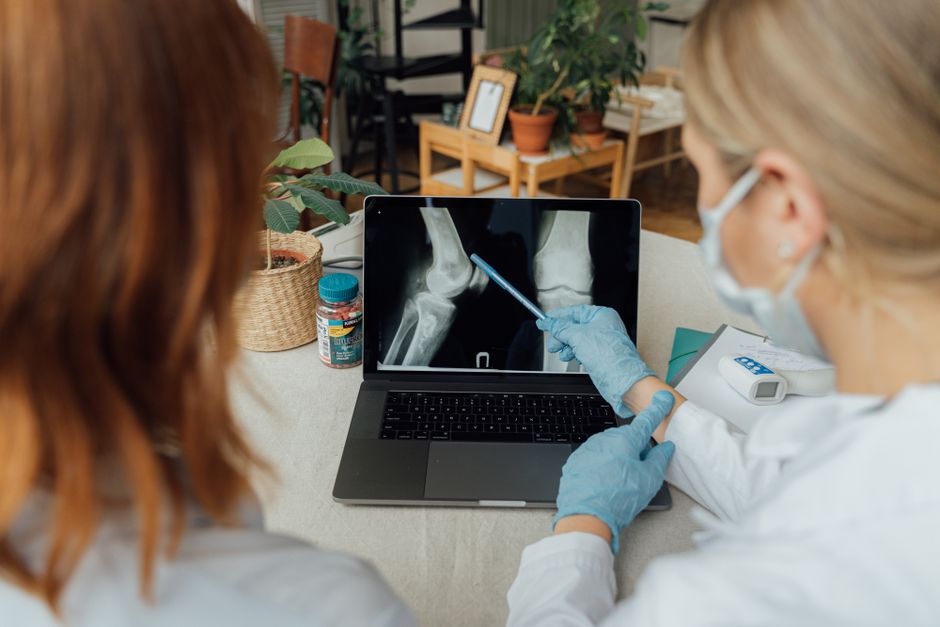
Cartilage does not have nerves or blood vessels, so it cannot heal itself easily once it is damaged. Over time, the loss of cartilage can cause bone spurs to form, the joint space to narrow, and the knee to become stiff and swollen. When doctors look at an X-ray and see little or no space between the bones, they describe it as bone-on-bone.
What Causes a Bone-on-Bone Knee?
The most common cause is osteoarthritis, a condition where cartilage slowly breaks down over time. Age is a big risk factor. As we get older, the cartilage in our joints naturally wears down. Other risk factors include being overweight, which puts extra stress on the knee joint with every step. A past knee injury — like a torn meniscus or ligament — can also speed up cartilage loss.
Some people are also more likely to develop knee osteoarthritis because of their genes. If a parent or grandparent had it, you may be at higher risk. Jobs or sports that involve repeated kneeling, squatting, or heavy lifting can also put extra wear on the joint over many years. In some cases, a bone-on-bone knee develops slowly without any single clear cause.
Common Symptoms to Watch For
Pain is the most common symptom. It may feel like a deep ache inside the knee, and it often gets worse with activity. Many people notice the pain is worse in the morning or after sitting for a long time. Swelling around the knee is also common, especially after activity. Some people feel a grinding or clicking sensation when they move the knee.
Over time, a bone-on-bone knee can make it hard to fully straighten or bend the leg. You might notice that your knee looks different — slightly bowed inward or outward — as the joint changes shape. Some people also feel weakness in the leg because the muscles around the knee try to protect the damaged joint. If any of these symptoms sound familiar, it is a good idea to talk to a pain specialist about what is going on.
Non-Surgical Treatment Options
Many people with a bone-on-bone knee are able to manage their pain without surgery, at least for a significant period of time. Physical therapy is often one of the most helpful first steps. A therapist can teach you exercises that strengthen the muscles around the knee, taking some of the load off the joint itself. Losing weight, if that applies to you, can also make a meaningful difference in how much pressure the knee has to handle each day.
Medications such as anti-inflammatory drugs can help reduce swelling and ease pain. Some people also benefit from topical pain creams applied directly to the knee. These approaches do not fix the damage, but they can make daily life much more manageable. Other non-surgical options include assistive devices like braces or canes, which can shift weight away from the damaged part of the joint.
Joint injections are another widely used option. Corticosteroid injections can reduce inflammation inside the knee and provide relief that may last weeks to months. Hyaluronic acid injections, sometimes called gel injections, may help lubricate the joint. Your doctor will talk with you about which type of injection might be a good fit based on your health history and how your knee responds to treatment.
When to See a Pain Specialist
If over-the-counter medicines and rest are no longer helping, it may be time to see a pain management specialist. A specialist can look at the full picture — your imaging, your symptoms, your lifestyle — and help you build a treatment plan that fits your specific needs. You do not have to wait until the pain becomes unbearable to ask for help.
At Unity Pain Management in Modesto, CA, our team works with patients who are dealing with knee pain at all stages. We offer joint injections, medication management, physical therapy referrals, and telehealth visits for your convenience. We also work with most insurance plans, so getting care is easier than you might think. You deserve to have a team in your corner.
What About Knee Replacement Surgery?
Surgery is sometimes recommended when other treatments have not provided enough relief and the pain is seriously limiting daily life. A total or partial knee replacement replaces the damaged parts of the joint with artificial components. Many people do very well after knee replacement surgery, but it is a major procedure that requires recovery time and rehabilitation.
Surgery is not the right choice for everyone, and most doctors recommend trying non-surgical treatments first. The decision to have surgery should always be made carefully with your medical team. A pain management provider can be an important partner in that conversation, helping you explore every option before making a big decision.
There Is Reason to Feel Hopeful
A bone-on-bone knee is a serious condition, but it does not have to take over your life. With the right support and a good treatment plan, many people are able to move more freely and hurt less. The path forward may take some time and some trial and error, but help is available. You deserve to feel better, and there are people who want to help you get there.
If you are ready to take the next step, consider reaching out to Unity Pain Management to schedule a consultation. Our team is here to listen, to help you understand your options, and to work with you toward a better quality of life.
References
- Hunter, David J. and Felson, David T. “Osteoarthritis.” BMJ. 2006.
- National Institute of Arthritis and Musculoskeletal and Skin Diseases. “Osteoarthritis.” National Institutes of Health. 2023.
- Kolasinski, Sharon L. et al. “2019 American College of Rheumatology/Arthritis Foundation Guideline for the Management of Osteoarthritis of the Hand, Hip, and Knee.” Arthritis Care and Research. 2020.
- Mayo Clinic Staff. “Osteoarthritis — Diagnosis and Treatment.” Mayo Clinic. 2023.
- Bijlsma, Johannes W.J. et al. “Osteoarthritis: An Update With Relevance for Clinical Practice.” The Lancet. 2011.
Take back control of your life from pain.
Unity Pain Management offers personalized, evidence-based care in Modesto CA. In-person and telehealth options available. Most insurance accepted.
Call us at (350) 216-5774 — Unity Pain Management, Modesto CA
- Share
