
Cervical Radiculopathy: Pinched Nerve in Neck | UnityPain
- Home
- Cervical Radiculopathy: Pinched Nerve in Neck | UnityPain
Cervical Radiculopathy: Pinched Nerve in Neck | UnityPain
When Your Neck Pain Goes Down Your Arm
You wake up and feel a burning, shooting pain that starts in your neck and travels down your shoulder and arm. Maybe your fingers feel numb or tingly. Maybe your arm feels weak. If this sounds familiar, you are not alone. Millions of people deal with this kind of pain every year. It can be scary and confusing, especially when you do not know what is causing it. The good news is that there is a name for what you may be experiencing — and there are real ways to get help.
Cervical radiculopathy, often called a pinched nerve in the neck, happens when a nerve root in the neck becomes irritated or compressed. The pain can travel far from where the problem actually is. That is what makes it so confusing and sometimes so hard to live with. If you have been struggling with this kind of pain, know that your suffering is real, and you deserve answers and care.
What Is Cervical Radiculopathy?
Your neck, also called the cervical spine, is made up of seven small bones called vertebrae. Between each bone is a soft disc that acts like a cushion. Nerves branch off your spinal cord and travel through small openings between these bones. When something presses on one of these nerves — like a herniated disc, a bone spur, or inflammation — it can cause pain, numbness, tingling, or weakness. This is cervical radiculopathy.
The nerve that gets pinched tells you a lot about where your symptoms will show up. For example, a pinched nerve in the lower part of your neck often causes symptoms in your shoulder, arm, or hand. Each nerve serves a different area, which is why a doctor will ask you exactly where your symptoms are located. This helps them figure out which nerve is affected and where the problem is coming from.
Cervical radiculopathy is more common in people between the ages of 50 and 60, but it can happen at younger ages too — especially after an injury like whiplash or heavy lifting. Some people have it come on slowly over time. Others notice it almost overnight. Either way, it is a condition that deserves proper attention.
Common Symptoms to Watch For
The most well-known symptom is pain that travels from the neck down into the shoulder, arm, or hand. People describe this pain in many ways — burning, sharp, electric, aching, or shooting. It may get worse when you turn your head or look up. Some people find that tilting their head to one side actually brings a little relief.
Numbness and tingling are also very common. You might feel like your hand or fingers have fallen asleep and will not wake up. Weakness in the arm or hand is another sign. You may notice it is harder to grip things or lift your arm. These symptoms can affect everyday life — from driving to cooking to getting dressed in the morning.
It is important to know that not everyone has severe pain. Some people mostly feel numbness or weakness with very little pain. If you notice sudden severe weakness, trouble walking, or loss of bladder or bowel control, seek emergency care right away. These can be signs of a more serious problem that needs immediate attention.
How Is It Diagnosed?
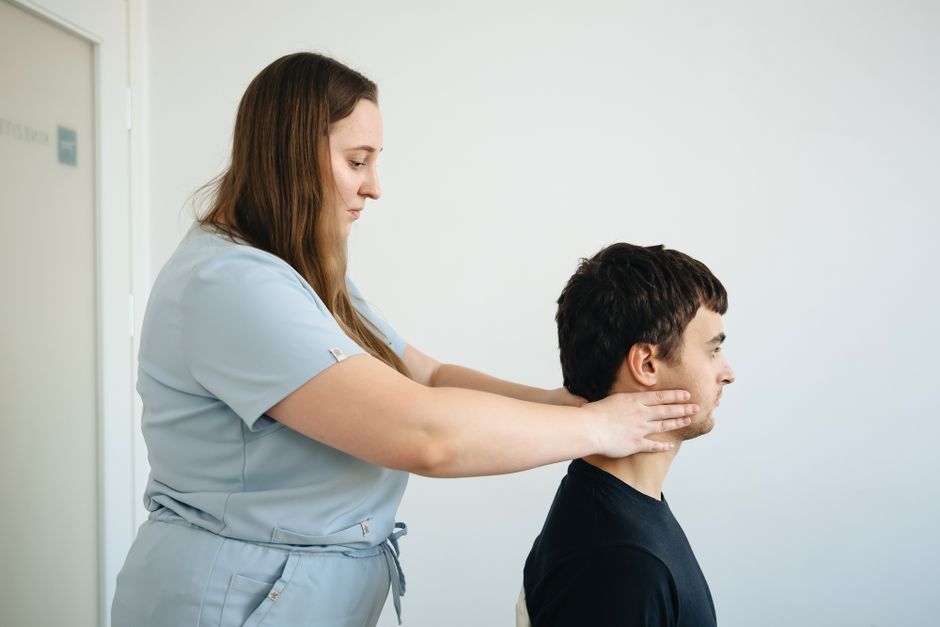
A doctor will start with a careful review of your symptoms and a physical exam. They may ask you to move your neck in different directions and check your reflexes, strength, and sensation in your arms and hands. One common test is called the Spurling test — the doctor gently presses on your head and tilts your neck to see if it reproduces your symptoms.
Imaging tests are often used to get a clearer picture. An MRI is the most helpful because it shows soft tissue like discs and nerves very well. An X-ray can show bone problems like bone spurs or narrowing between vertebrae. In some cases, a nerve conduction study or EMG may be done to check how well your nerves are working and to rule out other conditions.
Getting the right diagnosis matters a great deal. Neck pain alone can have many causes, and not all arm pain is from a pinched nerve. A thorough evaluation helps make sure you get the care that is right for you — not just a generic plan that may not address your real problem.
Treatment Options That May Help
The great news is that many people with cervical radiculopathy get better without surgery. Conservative treatment — meaning non-surgical care — is usually the first step. This often includes rest, activity changes, and physical therapy to strengthen the muscles around the neck and improve posture. A physical therapist can teach you exercises and stretches that take pressure off the affected nerve.
Medications can also help manage pain and inflammation. Anti-inflammatory medicines, muscle relaxers, or short-term oral steroids may be recommended by your doctor depending on your situation. For more targeted relief, injections such as cervical epidural steroid injections may be an option. These injections deliver medicine directly near the irritated nerve to reduce swelling and pain. At Unity Pain Management in Modesto, CA, the care team can evaluate your symptoms and help connect you with appropriate injection-based or other pain management options.
Surgery is considered only when conservative treatments have not worked after a reasonable period of time, or when there is significant weakness or nerve damage. Most people do not need surgery. Your care team will help you weigh your options carefully based on your specific condition and goals.
Living With Cervical Radiculopathy
Dealing with daily pain that travels into your arms and hands can make even simple tasks feel overwhelming. It can affect your sleep, your work, and your mood. It is okay to feel frustrated. Many people go months or even years before getting the right diagnosis and treatment. You are not imagining your pain, and you are not alone in this struggle.
Small changes can sometimes make a difference in daily comfort. Paying attention to your posture — especially when using a phone or computer — can help reduce stress on your neck. Sleeping with a supportive pillow that keeps your neck in a neutral position may also help. Avoiding activities that make your symptoms worse, at least temporarily, gives the nerve a chance to calm down.
If you have been struggling to find answers or relief, reaching out to a pain management specialist is a meaningful step. A team like the one at Unity Pain Management can work with you to build a care plan that fits your life, your insurance, and your goals. Healing is not always fast, but with the right support, many people do find meaningful relief.
A Hopeful Path Forward
Cervical radiculopathy can feel like it is taking over your life. The pain, the tingling, the weakness — they all add up. But this is a condition that is well understood by medical professionals, and there are many tools available to help you feel better. Most people improve with the right care and time. You do not have to keep suffering in silence or simply push through every day.
If the pain in your neck is traveling into your shoulder, arm, or hand, talk to a doctor or pain specialist who can properly evaluate you. Getting a clear diagnosis is the first step toward feeling like yourself again. There is real hope ahead — and the right care team can help you find it.
References
- Childress, Mark A. and Becker, Brant A. “Nonoperative Management of Cervical Radiculopathy.” American Family Physician. 2016.
- National Institute of Neurological Disorders and Stroke. “Cervical Radiculopathy Information Page.” National Institutes of Health. 2023.
- Eubanks, Jason D. “Cervical Radiculopathy: Nonoperative Management of Neck Pain and Radicular Symptoms.” American Family Physician. 2010.
- Mayo Clinic Staff. “Pinched Nerve — Symptoms and Causes.” Mayo Clinic. 2023.
- Bono, Christopher M. et al. “An Evidence-Based Clinical Guideline for the Diagnosis and Treatment of Cervical Radiculopathy from Degenerative Disorders.” The Spine Journal. 2011.
Take back control of your life from pain.
Unity Pain Management offers personalized, evidence-based care in Modesto CA. In-person and telehealth options available. Most insurance accepted.
Call us at (350) 216-5774 — Unity Pain Management, Modesto CA
- Share
